

TREATMENTS
BALANCING PATTERNS
The approach applied in Chinese Medicine is unique in that beyond the diagnosis of the so-called illness or condition, there is the ‘pattern’ diagnosis. The pattern diagnosis describes the overall collection of signs and symptoms that result from the combination of factors that continuously challenge the body. These include pain, quality of sleep, appetite, digestion, sensitivity to various weather factors, quality of menstruation, emotional & constitutional tendencies, lifestyle habits as well as the overall experience of the affected individual of his or her body.
This is significant for two main reasons:
1) a given ‘pattern’ can manifest as a host of seemingly very different illnesses, &
2) a given illness can manifest through a multitude of very different patterns.
The patient and the practitioner enter into a kind of partnership based on trust, where the patient relies on the practitioner to competently defend the best possible interests of the patient’s health, and the practitioner relies on a proper level of commitment on the part of the patient to participate in the dynamic strategy with the goal to ultimately attain a state of independent health & well-being.
After the initial consultation which can take up to an hour, the appropriate treatment is started. In the case of acupuncture, depending on what is being treated and also the comfort of the patient, the treatment will take place typically in a lying down position, either on the back, side or stomach. For some conditions it is beneficial to be in a seated position with proper support in place. The actual treatment can last from 15 minutes to an hour, typically averaging 30 minutes.
A common approach in the practice of Chinese medicine is one of regular treatment. This is to allow for a gradual and therefore safe transition for the body from a state of compromised health to the ideal state of independent functioning. Based on the patient’s individual circumstances, this can mean, for example, that acupuncture treatments will be arranged daily, weekly or monthly, etc., or that herbal medicine will be dispensed daily, weekly or monthly.
The overall duration of treatment using any medicine will fundamentally depend on two main factors:
1) The constitution of the individual person being treated
2) The nature of the condition being treated
This means that the treatment of certain chronic conditions or for more weakened constitutions may last indefinitely until certain changes have been confirmed to warrant otherwise.
Utterly irrespective of the individual being treated, the primary motivation is always unchanged: To support the enabling of proper functioning within the body to continue independently from any therapeutic tool, whether oriental or occidental.
show less ↑

ACUPUNCTURE
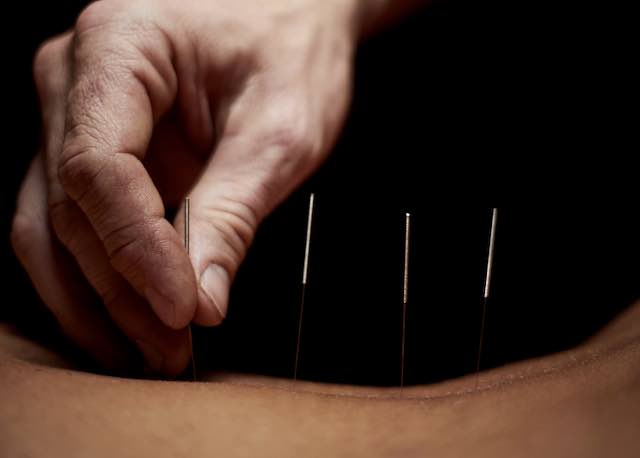
Acupuncture has evolved over several thousands of years to develop into a highly efficacious therapeutic modality. It involves the placement of very thin needles at points that are located along pathways that travel throughout the trunk, head and limbs of the body – commonly referred to as ‘meridians’ or ‘channels’ – to stimulate an adjustment of their circulation and thereby functioning throughout all organ, glandular, tissue and ultimately cellular structures of the body.
There are various possibilities in terms of the sensations that may be experienced during an acupuncture treatment. These may include heaviness, dullness, numbness, radiating sensation away from the acupuncture point, itchiness, ticklishness, warmth, coolness, or sensations occurring in more distant areas of the body that the pathway being stimulated passes through. These sensations can occur by themselves or in combination, and are quite varied from person to person.
“Such reactions are very favourable as they confirm having gained access to the body’s dynamic, referred to as Dé Qì __ – “”obtaining Qì”” in Mandarin Chinese. ”
Acupuncture stimulates the functions of various structures within and regulated by the central nervous system, particularly its autonomic function, i.e. those basic physiological & life-sustaining functions that are generally not under our conscious control such as body temperature, heart rate, blood pressure, respiratory rate, enzyme and hormone production and output, glandular secretions, etc.
“As these life-sustaining functions are inevitably affected to varying degrees with any given state of disease as well as by various daily factors such as the frequency and quality of rest, activity and food; sensitivity to weather factors, emotional temperament, posture, breathing habits, etc., acupuncture therapy is very effective in many medical situations as well as to address so-called sub-states of health.”
TUI NA MASSAGE
Tui Na is a system of Chinese therapeutic massage that consists of a variety of mainly hand techniques that are applied to the body to encourage blood and lymphatic circulation, as well as promote a regulating of the nervous system.
It is the mechanical displacement of all the different fluids of the body that improves the rate and quality of recovery from physical injury, and also from functional, emotional and mental stress.
My general approach is to begin a session with a gentle facial and scalp massage,moving to the neck and arms, chest and abdominal organs and legs.
You will then be asked to turn over and lie on your stomach to work on opening your spine.
I will spend more time on certain areas that need more attention, based on what you were coming in with.
CUPPING
Cupping is not unique to Chinese medicine, and is practiced in a variety of other Asian, middle eastern, northern African and European countries.
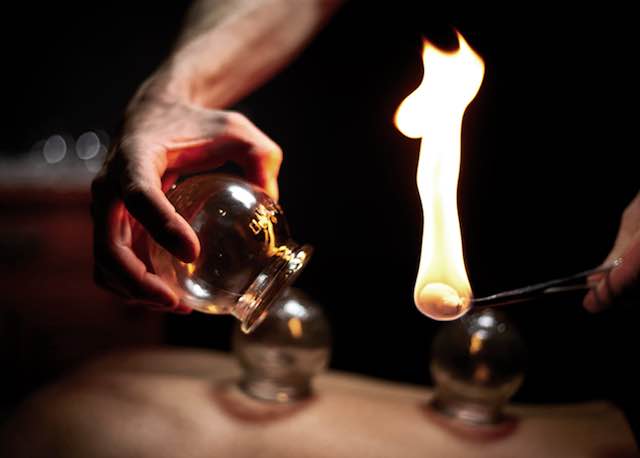
One of the traditional methods involves burning up the oxygen inside glass cups for a brief moment, immediately after which – as air is rushing back into the cup to equalize the pressure – it is placed on the appropriate area of the body to which it will adhere through the vacuum that has been created.
This vacuum draws up unprocessed metabolic wastes and toxins closer to the body surface where it is easier for the body to process these more efficiently.
Depending on the degree of stagnated toxins and unprocessed metabolic wastes, the cups will leave varying shades of discolouration on the skin surface. With darker discolouration confirming more intense stagnation having been moved.
These markings can resemble bruising in appearance, yet differ distinctly in that bruising is caused by sudden rupturing of blood vessels that leak out into the space between body tissues, whilst the cupping effect works with a negative pressure, thereby not inflicting any damage to blood vessels.
Cupping is often combined with acupuncture therapy or by itself, being very effective for chest infections, asthma, digestive disorders, muscular & joint pain, common cold, and more.
MOXIBUSTION
Moxibustion – ‘moxa’ for short – is a very old form of heat therapy that pre-dates acupuncture.
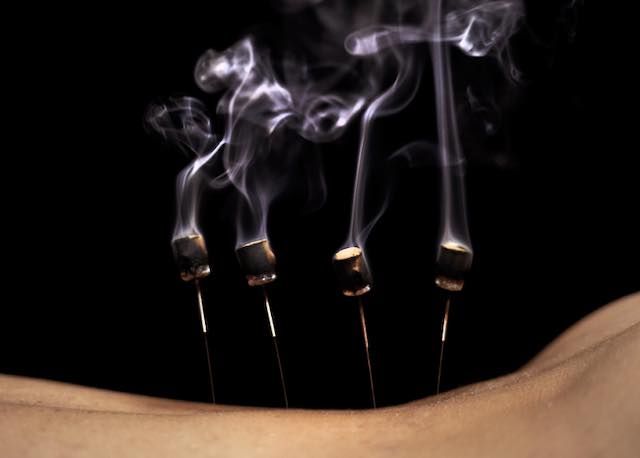
“It involves the use of the dried Mugwort plant (Chin. ài yè 艾葉; Lat. Artemisiae Vulgaris), which is then prepared in a variety of ways: rolled with thin paper into a cigar shape; used in loose form where it is molded into small balls and placed on the handles of acupuncture needles; or molded into cones and placed directly onto the body surface, or with different substances placed between it and the skin such as a slice of fresh ginger, aconite, or salt to enhance the therapeutic effect.”
Additionally, there are also ‘moxa hammers’ and ‘moxa boxes’ that allow for a more focused application of greater amounts of heat to the appropriate areas of the body.
The moxa is set alight and the heat allowed to slowly penetrate the body and activate the dynamic of the acupuncture point(s) and channel(s) located beneath and around the moxa, as well as stimulate microcirculation in the local area of application.
This allows for a more efficient exchange of metabolic wastes and toxins with more efficiently assimilated nutrients from the digestive tract and oxygen from the lungs.
NEI GONG
Nei Gong loosely translates to “”internal skill”” & is more popularly known as Qi Gong pron. “”chee gong”” / “”skill using Qi””. It is a system of combined physical, breathing & mental exercises which directly engage the person practicing them into the process of positive change whilst also granting an ever-increasing sense of control over their health and well-being.”
Nei Gong is defined by the regulation of three main aspects, namely:
- Regulation of Posture
- Regulation of Breath
- Regulation of Mind / Focus of Attention
Ni Gong is used in two main ways:
- For those suffering from debilitating illness as a self-help tool to support their bodies’ basic physiology in the fight against illness as well as aid in the recovery phase after illness, physical injury or surgery
- For those interested in increasing their levels of health to minimise vulnerability to illness & injury
In other words, Ni Gong is appropriate for anyone who is interested in becoming more actively involved in how their bodies are able to continue to function, consequently gaining an ever-increasing sense of control over their physical, mental, emotional and spiritual selves.
This is accomplished by regularly practicing a combination of the following two routines:
- Simple stationary standing exercises that involve holding one’s posture according to strict principles of allignment for ever-increasing time periods
- Simple dynamic exercises that emphasize these very same postural principles in motion, allowing for the body to become more and more engaged as a single dynamic unit
This minimises the degree of stress elicited by gravity on joint- and other soft-tissue structures of the body and thereby also the strain on the internal organs, glands, nerve pathways & blood vessels. This significantly decreases the effort the body requires to exert itself, whether for maintaining basic body functions, physical activity or selfdefense.
From a western medical perspective, the combination of postural alignment and breath control provokes a regulatory effect on the sympathetic & parasympathetic aspects of the autonomic nervous system, consequently regulating heart & respiratory rate, blood pressure, digestive function, as well endocrine & hormone secretion.
This means that the spectrum of application of Nei Gong exercises is very broad. With continued practice, fundamental physiological functioning continues at a more efficient pace which, in turn, allows for increased circulation to broader areas of the brain leading to heightened levels of consciousness.
In countries such as China and Japan, Nei Gong is routinely taught to people suffering from diabetes, asthma, rheumatoid arthritis, immune compromised conditions, as well as to those undergoing western conventional treatments for cancer and many other conditions.
“With a long and richly documented history – the oldest archaeological find dating back to sometime during the “”Spring-Autumn”” / “”Warring States period””, 770 – 221 B.C., where the basic concept of Ni Gong practice was engraved onto a twelve-sided jade stone with a total of 45 pictographic characters – this system of medical and health-enhancing exercises is simple, safe and effective, warranting more serious attention for the benefit of those willing to become more involved with their own health.”
CHINESE HERBAL MEDICINE
Chinese herbal medicine is becoming an increasingly popular therapeutic modality outside of Asia. Similar to acupuncture, it had also developed to a very high level of application already a very long time ago.
Chinese herbal medicine is applied in two fundamental ways:
- Internal ingestion in the form of decoctions / soups, granules, tinctures, pills, medicinal wines, food therapy
- External application in the form of medicated poultices, creams, powders, steams, washes, baths, suppositories
Regardless of its application, traditionally and also ideally, Chinese herbal medicine is prepared much like a tailored garment is for the dimensions of the individual who will wear it, in that the individual ingredients of a prescription along with their respective dosages will be ‘fitted’ to the individual person taking it.
This allows for maximum flexibility on the part of the practitioner who authors the prescription to adjust the number of ingredients and their dosages appropriately to the nature of the condition being treated as well as the response of the person taking it.
The method of administration is determined by several factors, amongst them the nature of the condition being treated and, to an extent (with decoctions), also by the willingness of the patient to commit to the preparation process of their medicine due to the overall cultural unfamiliarity of being personally involved with the actual preparing of one’s medicine. The latter occasionally being grounds for some to decline and rather opt for the convenience of patented herbal preparations, often in pill form.
As much as patent medicines are indeed convenient for the patient, it is, in actual fact, somewhat limiting for the practitioner in that there is not the same kind of flexibility in adjusting the treatment approach and therefore being overall more restricted in addressing the patient’s pattern more accurately.
Patent medicines are nonetheless a very effective tool and can also lead to very favourable results. At the same time, patent prescriptions may function as an introduction to herbal medicine for the patient who may eventually be convinced to pursue the customised option.
product prices
CHINESE HERBAL MEDICINALS
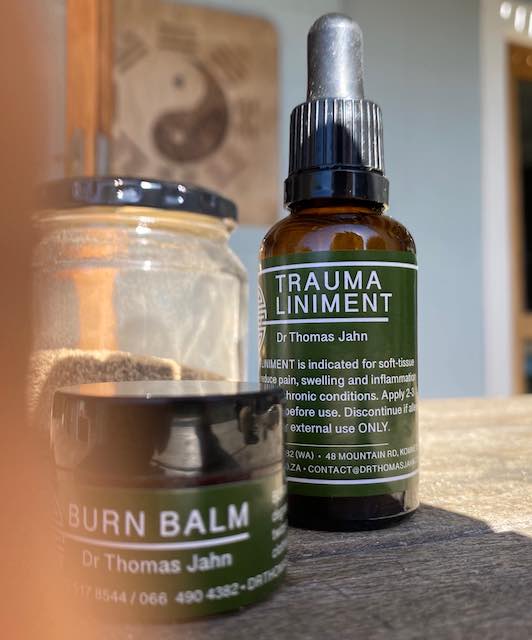
BURN BALM | 燙傷멘 | Topical skin-regenerating cream | 25g | R250
TRAUMA LINIMENT | 딨댔아 | Topical treatment for pain and swelling | 30ml | R250
DIGESTIVE TONIC | 聘窮攣氣彊 | Huo Xiang Zheng Qi San | Expel external damp enteritis | 6 individual vials | R200
RELAXED WANDERER| 良遙逍遙散逍遙散 | Xiao Yao San | stress & anxiety herbal granules to be mixed with hot water | 90g | R400
IMMUNE BOOSTER | 獨퓬뱅輦湯 | Du Qiang Gui Zhi Tang | Cold and flu tonic granular herbs to be mixed with hot water | 90g | R400
8 TREASURE’ VITALITY TONIC | 검勵湯 | Ba Zhen Tang | Fatigue-relieving granular herbs to be mixed with hot water |90g | R450
CHINA HERB KIDS RANGE | Calm Angel | Dermo Angel | Stomach Angel | Teething Formula | Cough Formula | Tummy Angel | cold flu Angel | FEVER FORMULA | VITALI ANGEL | 45g | R215 ea
individual granular herbal scripts POA
treatment rates
acupuncture | tuina | moxibustion | cupping | qi gong
90 min new patient extended consult / history taking and full treatment R1500
60 min new patient brief consult and full treatment R1079
60 min return patient follow up treatment R890
30 min consult R650
online herb consult 5 min R200 | 15 min R450
TESTIMONIALS
What people say
about it
“…his roles as doctor, acupuncturist and general support system have been incredible. My health has improved immensely. Friends commented on how much I’ve changed since starting to train Qigong under Thomas, having much more self-confidence.
Highly recommended.”
Klaas du Randt
Retired copy editor
“I have been a regular patient of Thomas’ for nearly a decade and there is no limit to my praise for his work and my respect of the man. He successfully guided me through my own cancer years ago and has been an integral part of keeping me in good form physically, mentally and spiritually ever since. Five stars are not enough! 🌟🌟🌟🌟 🌟”
Jim Lees
Human Being
Any questions about treatments or bookings?
Please WhatsApp 066 490 4382 or send a mail to contact@drthomasjahn.co.za